Sanding and polishing
We sand every day a variety of solid timber floors, floating floor, particleboard, and parquetry. We also sand old existing floors after we remove the previous coverings and we often find a suitable wood hiding beneath the old coverings. Floor sanding usually involves three stages: Preparation, sanding, and coating with desired product.
All our sanding jobs are completed with specialized sanding machines, tools and equipment which allows us to work clean and without dust. By this process the majority of material is removed. The areas where we can't reach with large machines such as, edges, corners, and stairs we sand with a smaller machine called an edger. A finishing machine is then used for the final sanding.
Preparation: We punch all nails in which are protruding above the boards. Otherwise the nails can severely damage our sanding machine. We remove the staples or tacks which were once used to fasten previous (if any) coverings and so we reduce the possibility of damage. Some brands or types of adhesives which have been used to secure coverings may need to be removed, otherwise they would clog papers and running gear of the machines used. Some of these adhesives while present make sanding impossible.
As soon as we finished with preparation we can start with sanding.
Sanding: The first cut is done with course grit papers to remove old products and to make the floor flat. Through that we reduce the differences in height between the boards. The large sanders are used across the grain of the timber. The areas which cannot be reached by the large sanders are sanded by an edger, as the same grit paper as the rest of the floor. If filling of holes or boards is desired this is the stage where this is usually done.
And at last:
Coating which usually our customer chooses or we can advise what is suitable according to the circumstances. Sometimes is really hard to make the right choice in terms of finish, there are many different finishes, to help you with the decision please watch this video
compare different finishes
There are many options such as:
Synteko Solid oil finish is an alkyd-based natural high solid oil, matte floor finish with excellent properties. It has extremely high solids (90%) and therefore gives up to three times more coverage compared to normal wood floor oil. The product is oxygen curing and provides a beautiful smooth surface with an excellent resistance to wear. Synteko Solid oil is formulated for treatment of wood and cork floors and also wooden stairs, sills, benches, decks, etc. Due to the excellent wear resistance of the product, it is especially recommended for use in commercial areas like offices, stores, museums and other areas where high wear resistance is needed coupled with low maintenance costs.
We would recommend if for households with animals and heavy traffic areas. Unfortunately solid oil finish doesn't offer satin or gloss finish. It gives timber a raw, rustic look.
Polyurethane water-base finish is a two-component, water-based, low-odour, non-yellowing aliphatic polyurethane hardwood floor finish for use in high traffic and commercial areas. This finish is highly desirable because it emphasises the timber's natural colour and not the coating on top. It comes in three gloss levels: Matte, Satin and Gloss. Polyurethane finish gives maximum resistance to wear, scratching, scuffing, marring and chemicals. It is, therefore, ideal for surfaces subjected to unusually heavy wear. It can be used on untreated or previously finished timber surfaces.
Advantages:
- It is a non-toxic timber floor finish, does not contain isocyanates.
- 100 % polyurethane
- Proven resistance to wear
- Non yellowing
- Maintains natural timber colour
- Fast drying (1-3 hours)
- Non-flammable
- Safer for the environment
Modern Polyurethane finish is a fast-drying, two-component, acid-curing hardwood floor finish for interior use based on modified amino and alkyd resins in a solvent mixture. This finish has an amber colour, enhancing natural wood colours. It delivers an extremely durable, long lasting, smooth, very glossy and beautiful finish. Suitable for finishing of hardwood and other timber floors in residential as well as in commercial areas. It is self-sealing and its excellent workability and fast drying time provide the benefit of one-day job application. It is available in three gloss levels: Matte, Satin, Gloss.
Disadvantages:
However because these finishes flow into the tongue and groove joint between boards and glue the boards together, when natural shrinkage occurs, boards tend to clump together causing unsightly gaps between some boards at irregular spacings or splitting within some boards.
- Toxic fumes contain isocyanates = are harmful to the respiratory system and are particularly dangerous for asthma sufferers.
- Necessary to vacate premises
- Yellowing by UV-light
- Long drying times 6-8 hours
- Unnatural plastic appearance
- Highly flammable
- Harmful to health and environment
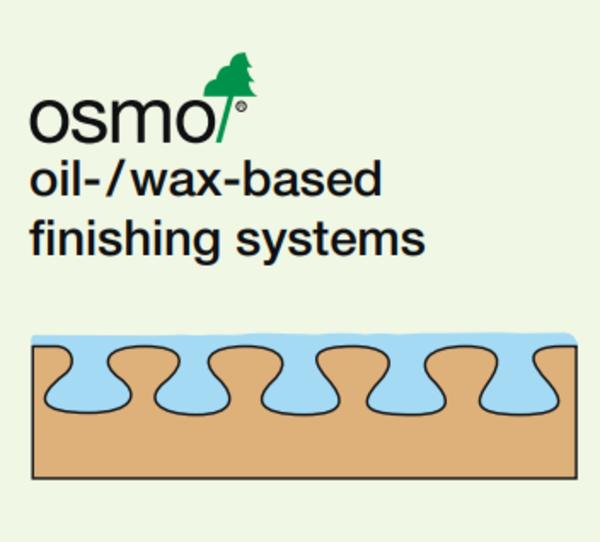
Tung-oil finish - produce subdued or semi-gloss appearance. Tung-oil is a drying oil which is extracted from the seeds of a tree. When applied, it is absorbed slightly into the surface of the timber and allows the natural seasonal shrinkage and expansion to occur without highlighting the gaps between boards. Although this finish may show marks more easily than hard surface finishes, most marks are generally easily removed with little methylated spirits on a damp cloth. Provided tung-oil finishes have not been waxed, areas which received most traffic can be recoated to restore their appearance, and these will generally blend quickly with the surrounding original finish. If the floor was waxed, the waxing process has to be repeated every year. After a the waxed surface turns dull.
Liming is a type of bleaching process carried out before a finish is applied to the floor. Liming generally gives a floor a lighter, slightly milky appearance.